
The underperformance comes amid liquidity concerns in the non-banking finance companies space and Essel Group default news.

The stimulus package announced by the government for the revival of the pandemic-hit economy has been found to be "inadequate", according to a Parliamentary panel report. The report of the department-related Parliamentary Standing Committee on Industry on the impact of COVID-19 pandemic on micro, small and medium enterprises (MSME) sector has noted that in the process of economic recovery post-first wave of the pandemic, the second wave has even more vigorously ripped the economy particularly the MSME sector. "The committee observes that the stimulus package announced by the government for the economic revival from the pandemic hit economy has been found to be inadequate as the measures adopted were more of loan offering and long-term measures instead of improving the cash flow to generate demand as immediate relief," it said.
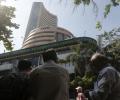
A rally in Reliance Industries and Kotak Bank helped the index recover some of the losses

Ankit Mehra, founder and CEO, GyanDhan, an education financing marketplace, tells you how to apply for an education loan in the pandemic.

The fall was led by banking stocks, with IndusInd Bank, Kotak Bank, Federal Bank, Axis Bank, ICICI Bank, HDFC Bank and SBI declining up to 2.36 per cent.
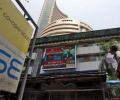
The stock markets, which had opened in the green on rate cut hopes, tumbled after the monetary policy announcement.

'Would you want to bring kids into a world that could run out of drinking water before they reach adulthood?'

Nestle India was the top loser in the Sensex pack, shedding 2.20 per cent, on its first day as part of the index.
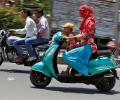
The two-wheeler sector has been underperforming its peers on the volumes front for over five quarters now. Even in the March quarter, Bajaj Auto and Hero MotoCorp posted a 17-24 per cent YoY decline in volumes, the sharpest in the listed auto universe. The ongoing impact of frequent price hikes, all-time high fuel prices, and muted rural sentiment has led to the lacklustre showing by two-wheeler makers. What has aggravated the situation for two-wheeler companies, which get almost all their sales from the internal combustion engine or ICE-based units, is the traction for electric two-wheelers (EV).

The BSE Midcap index has declined 5.7% thus far in May 2018. In comparison, the S&P BSE Small-cap index has lost 5.6%

Higher levels could not be sustained as participants offloaded their long positions in view of September series expiry.

Top gainers in the Sensex pack included Bajaj Finance, ONGC, Yes Bank, HDFC, HCL Tech, Tech Mahindra, TCS, ICICI Bank and RIL, rising up to 3.57 per cent.

In the Sensex pack, losers included TCS, HUL, Tata Steel, HCL Tech, Infosys, Bajaj Finance, HDFC, IndusInd Bank, Asian Paints, ITC and Vedanta, shedding up to 3.70 per cent.
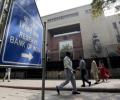
According to Soumya Kanti Ghosh, chief economic advisor of the State Bank of India group, a 50 bps rate cut is a possibility, but 25 bps is more likely.

Both the indices closed at five-month highs, led by financial services, IT and metal stocks, amid persistent foreign fund inflows.
Shares of all the 14 companies are currently trading above their issue price.

If we persist in talk and little action, I think we will slip. I fear the consequences of sustained slow growth. We need strong, sustained, clever action today, Rajan said.
Among the Sensex constituents, Tata Motors was the biggest loser with 6.52 per cent fall, followed by Vedanta 5.09 per cent, Bajaj Auto 4.99 per cent, Maruti Suzuki 4.26 per cent and Tata Steel 2.65 per cent.

The Nifty too slipped below the psychologically important 11,000 mark.
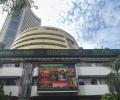
Yes Bank was the biggest gainer, rising 3.40 per cent, after ace investor Rakesh Jhunjhunwala bought approximately 1.3 crore shares of the company for around Rs 87 crore through open market transactions.

The payouts were 22 per cent lower than the previous year's tally of Rs 7,938 crore.

SBI was the biggest gainer in the Sensex pack, rallying up to 12 per cent, followed by Sun Pharma, HDFC, Tata Steel, Bajaj Finance, Maruti, ICICI Bank and Bharti Airtel.

One must be extremely cautious while shopping with a credit card.

'While growth will bounce back from the current sub-5 per cent, it will stay lower than the already inadequate long-term average of 6.6 per cent,' notes T N Ninan.
The indices closed with losses for the week, with the Sensex declining 476.14 points, and the broader NSE Nifty falling 155.45 points during the period.

Sensex ends lower; govt schemes in focus.

Be mindful that each instrument is governed by a different set of gifting rules and is also taxed differently.
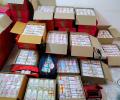
With this amount, the total seizure in the case has now gone upto Rs 166 crore in a single case.

The biggest gainers in the Sensex pack were Sun Pharma, Bajaj Finance, Vedanta, Yes Bank, ICICI Bank, HDFC, Tata Motors, HCL Tech, IndusInd Bank and Axis Bank, rising up to 2.98 per cent.

The seizure occurred during raids at eight premises of a group engaged in sand mining in Tamil Nadu.

Mixed global cues and decline in crude oil prices further dent the sentiments.
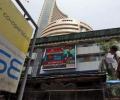
The market breadth, indicating the overall health of the market, turned negative from positive

The broader NSE Nifty slipped below the 10,500-mark by falling 103 points, or 0.97 per cent, at 10,482.20. It touched a high of 10,645.50 and a low of 10,464.05 during the day.

'If one believes that the Indian stock market will go up 70 per cent every year for the next 10 years, I wish you good luck!'

Umran was a net bowler during India's last World T20 campaign in the UAE.

"The Monetary Policy Committee recognises that there is monetary policy space for future action. However, given the evolving growth-inflation dynamics, the MPC felt it appropriate to take a pause at this juncture," the RBI said in its fifth bi-monthly monetary policy for this fiscal.
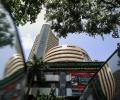
The S&P BSE 500 index, which accounts for 94% market capitalisation of BSE listed companies, has gained 45% from its March 24 low. However, out of the BSE 500 index stocks, 225 have underperformed the index by gaining less than the broader index during this period.

Sectorally, metal, auto and IT stocks were leading gainers amid sustained foreign fund inflow.
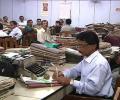
India's services sector activities contracted further in June as the intensification of the COVID-19 crisis and reintroduction of containment measures restricted demand, a monthly survey said on Monday. The seasonally adjusted India Services Business Activity Index fell from 46.4 in May to 41.2 in June, as new work intakes and output contracted at the fastest rates since July 2020, which prompted companies to reduce employment again. Subdued demand conditions resulted in a second successive monthly drop in new business received by services firms.
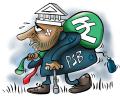
According to a communication by the ministry to the heads of PSBs, it will be a bottom-up consultative process from the branch level onwards which will involve discussions at the branch or regional level, state level and national level.
